
Skip to product information
1 of 5

Nudae Health

Female Fertility Insights Blood Test

Female Fertility Insights Blood Test

Women
Regular price £449.00
Regular price £499.00 Sale price £449.00
Sale Sold out

An advanced blood test designed to give women a deeper understanding of key health markers linked to longevity, hormones, metabolism, and overall wellbeing.

WHY THIS TEST STANDS OUT

  • The most comprehensive blood test for women in the UK- covering hormones, nutrients, inflammation, and metabolic health
  • Tailored to women’s biology, accounting for different life stages
  • Tested in UKAS-accredited laboratories for trusted accuracy
  • Straightforward, actionable results to support prevention and long-term health
Blood Test Package Options

WHAT’S INCLUDED

  • In-clinic or at-home blood collection options
  • Comprehensive biomarker blood analysis
  • Personalised women’s health report
  • Secure online access to your results

Complete Your Health Insights

Advanced Longevity Blood Test - (For women)

Anti-Mullerian Hormone (AMH)

£66.00
Advanced Longevity Blood Test - (For women)

Advanced Omega 3 and 6 Fatty acids

£120.00
View full details
Female Fertility Insights Blood Test
Regular price From £275.00
Regular price £299.00 Sale price From £275.00

Thinking About Your Fertility?

Could reproductive hormone patterns be influencing your cycle and fertility health?

FATIGUEChanges in cycle lengthPersistent fatigueBrain fogPMSPAINFUL PERIODSPoor concentration
NIGHT SWEATSLOW LIBIDODigestive issuesStruggling to conceiveMood fluctuationsWeight changes
POOR SLEEPNutrient deficienciesHormonal fluctuationsInflammationSkin changesHair thinning

The Blood Test, Explained

From sample to results, your health insights in three clear steps.

1

Provide Your Sample

Attend a clinic for a professional blood draw or use a convenient at-home collection kit, with simple instructions to guide you through the process.

2

Detailed Analysis

Your sample is reviewed in UKAS-accredited labs, measuring a wide range of blood markers connected to women’s hormones, metabolism, nutrient levels, and inflammation.

3

Explore Your Results

Receive a tailored report through a secure online dashboard, presenting your results clearly with practical guidance to support long-term health.

4

Nutritionist Appointment

Discuss your results in a 1:1 online consultation with a qualified nutritionist, focusing on practical, personalised guidance.

5

Retest & Track Progress

Re-test after 6 months to monitor changes, measure improvements, and adjust your health plan over time.

About This Test

  • Feeling lower in energy or more tired than usual
  • Shifts in mood, focus, or mental clarity
  • Changes in menstrual cycles or hormone fluctuations
  • Weight changes or difficulty maintaining weight
  • Skin changes such as breakouts or sensitivity
  • Changes in hair growth or thickness
  • Occasional bloating or digestive discomfort
  • Feeling run down more often than usual
  • Changes in bone, muscle, or joint comfort
  • Interest in understanding cardiovascular markers and overall health trends

1. Ovulation & Cycle Signalling Hormones

These hormones regulate communication between the brain and ovaries and play a central role in ovulation and menstrual cycle timing.

  • FSH (Follicle-Stimulating Hormone)
  • LH (Luteinizing Hormone)
  • Oestradiol
  • Progesterone
  • AMH (Anti-Müllerian Hormone)

Together, these markers provide insight into cycle patterns, ovulatory signalling, and reproductive hormone dynamics.

2. Pituitary & Reproductive Regulation

Hormones produced by the pituitary gland influence reproductive signalling and overall endocrine balance.

  • Prolactin

This marker helps provide context when interpreting reproductive hormone patterns.

3. Thyroid Function & Thyroid Autoimmunity

Thyroid hormones play an important role in cycle regulation, ovulation, and metabolic support for fertility.

  • TSH (Thyroid-Stimulating Hormone)
  • Free T3
  • Free T4
  • Anti-TPO Antibodies
  • Anti-Thyroglobulin Antibodies

Assessing both thyroid hormones and thyroid antibodies provides a more complete view of thyroid-related influences on fertility health.

4. Androgens & Hormone Availability

Androgen hormones and binding proteins influence energy, libido, ovulation patterns, and hormone balance.

  • Total Testosterone
  • Free Testosterone
  • DHEA-S
  • SHBG (Sex Hormone Binding Globulin)
  • Albumin
  • Androstenedione

Measuring both hormone levels and binding proteins helps distinguish total hormone production from biologically active hormone availability.

5. Metabolic & Blood Sugar Regulation

Metabolic health can influence hormone balance and ovulatory function.

  • Insulin (fasting)
  • HbA1c

These markers provide insight into blood sugar regulation and insulin response.

6. Stress & Inflammatory Markers

Stress and inflammation can influence hormonal signalling and reproductive balance.

  • Cortisol
  • CRP (C-Reactive Protein)

7. Micronutrients Linked to Fertility

Key nutrients support hormone production, methylation pathways, and overall reproductive health.

  • Vitamin D
  • Vitamin B12
  • Folate (Vitamin B9)
  • Ferritin
  • Homocysteine

70%+


of women have at least one key longevity-related biomarker outside optimal ranges despite feeling well.

Preventative health
Healthy ageing
Optimal vs normal
Early awareness

Metabolic Helath

Why it matters

Why it matters

Metabolic health sits at the centre of long-term energy, hormone balance, and ageing. Blood sugar regulation influences how the body processes nutrients, maintains stable energy levels, and supports cardiovascular health.

Early changes in metabolic markers may occur before symptoms appear and can play a role in fatigue, weight changes, and long-term metabolic risk

This section supports insight into:

  • Blood sugar regulation
  • Insulin sensitivity
  • Energy metabolism
  • Long-term metabolic resilience

Thyroid Function

Why it matters

The thyroid acts as a metabolic control centre, influencing energy production, body temperature, mood, and weight regulation. Even subtle changes in thyroid hormones can affect how the body functions day to day.

Assessing thyroid markers together provides a clearer view of thyroid activity and how efficiently the body is converting hormones into their active form.

Hormones & Stress

Why it matters

Hormones and stress response systems are closely linked. Cortisol and reproductive hormones influence energy levels, mood stability, sleep quality, and resilience to physical and emotional stress.

Understanding stress-related hormone patterns helps provide context for how the body is responding to internal and external demands over time.

Liver & Detox Function

Why it matters

The liver plays a key role in processing hormones, nutrients, and metabolic by-products. It also supports detoxification pathways and helps regulate cholesterol and protein metabolism.

Assessing liver and kidney markers provides insight into how efficiently the body is filtering, processing, and clearing substances that impact long-term health.

Inflammation & Heart Health

Why it matters

Inflammation and cardiovascular health are closely linked and play an important role in long-term wellbeing and healthy ageing. Low-grade inflammation can influence blood vessel function, cholesterol balance, and metabolic health, often before symptoms become noticeable.

Assessing inflammatory markers alongside cholesterol and lipoprotein markers provides a clearer picture of cardiovascular risk patterns and overall heart health, rather than relying on single values in isolation.

Understanding these markers together helps identify early trends linked to cardiovascular resilience, metabolic balance, and long-term health.

Kat Bright - Nutritionist

Meet Kate Bright

Our Partner Nutritionist

Kat Bright is a dedicated nutritional therapist with a special interest in women's health. She is passionate about uncovering the root causes of low energy, digestive issues, hormonal imbalances, and weight concerns.

Kat takes a holistic, evidence-based approach, working closely with women to identify underlying issues and create sustainable strategies for lasting change. She particularly enjoys analysing blood test results to gain deeper insights, allowing her to take a highly personalised approach to care.

Her goal is simple: to empower women to build healthy habits, restore confidence in their bodies, and achieve vibrant well-being.

With Kat's support, your test results become more than just numbers on a page – they become a roadmap to lasting change.

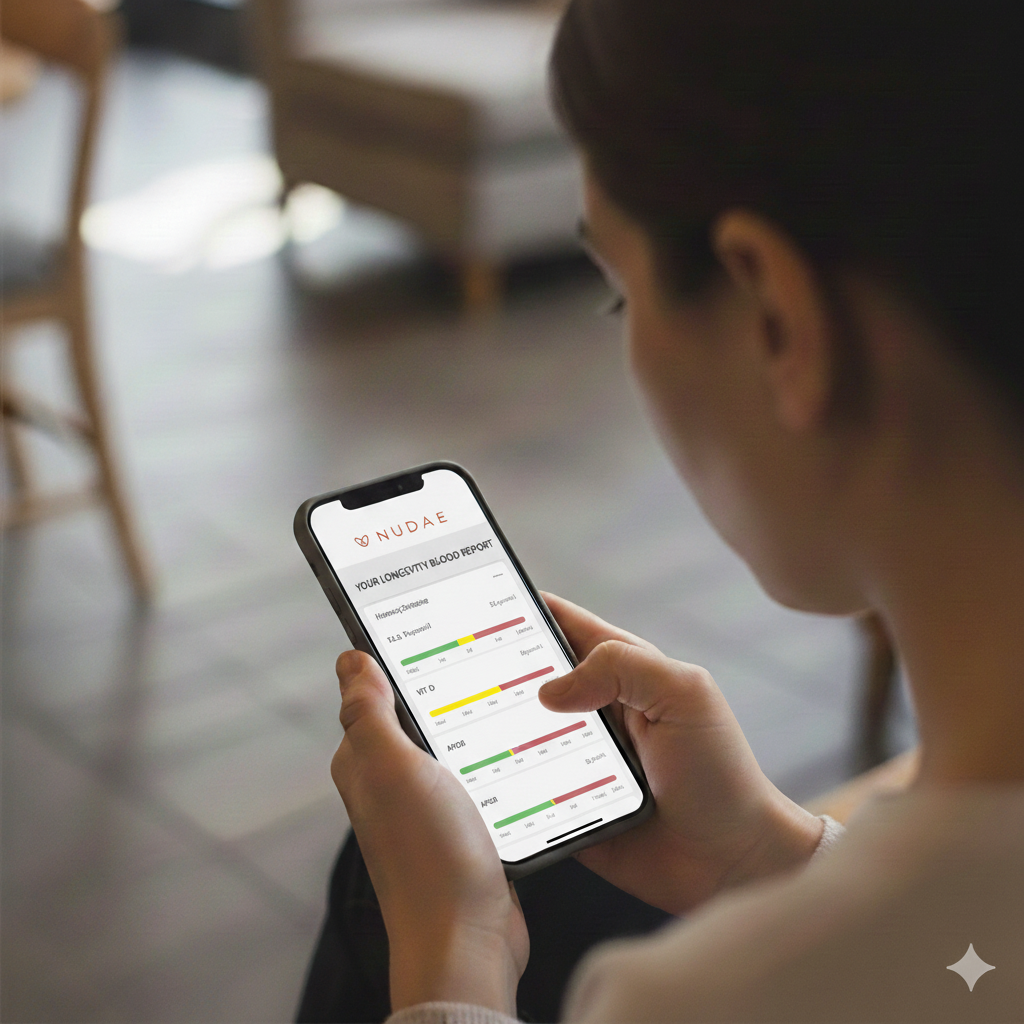
Your results, clearly explained

Understand Your Biomarkers and What They Mean for Your Long Term Health

Your Nudae longevity blood test gives you a detailed breakdown of hormones, nutrients, inflammation, metabolic health, and key markers linked to energy, mood, fertility, and prevention.

You'll receive a clear, science backed report that helps you understand what's optimal, what needs attention, and what could be influencing how you feel day to day.

FAQ's

What is a Longevity Blood Test for women?

A Longevity Blood Test for women is a comprehensive panel that measures key biomarkers related to aging, hormonal balance, metabolic health, inflammation, and overall cellular longevity. It helps women understand their long-term health risks and optimize lifestyle, nutrition, and wellness strategies.

What biomarkers are included in a Longevity Blood Test for women?

Most longevity blood tests for women include markers like hormones (estrogen, progesterone, testosterone), thyroid function (TSH, T3, T4), inflammation markers (CRP), metabolic indicators (HbA1c, glucose, insulin), lipid profile, vitamin D, B12, iron, and advanced aging indicators like telomere health or oxidative stress levels.

Who should take a Longevity Blood Test?

Women aged 25 and above - especially those experiencing fatigue, hormonal imbalance, weight changes, stress, sleep issues, irregular cycles, early aging signs, or planning long-term wellness can benefit from a Longevity Blood Test. It’s also ideal for women focused on preventive healthcare or biohacking.

How often should women take a Longevity Blood Test?

Most experts recommend taking a Longevity Blood Test once every 6–12 months. Regular testing helps track biomarker changes, observe trends, and adjust nutrition, supplements, and lifestyle habits for optimal aging and long-term wellness.

How do I prepare for a Longevity Blood Test?

Preparing for a Longevity Blood Test may include fasting for 8–12 hours (depending on the panel), avoiding intense workouts 24 hours prior, staying hydrated, and consulting with your doctor about any medications that may impact results. Some hormone tests may require specific cycle-day timing.

What can I do with the results of my Longevity Blood Test?

Your results help you understand your biological aging, hormonal status, nutrient levels, inflammation, and metabolic health. Based on the findings, you can adapt your diet, fitness routine, supplements, stress management, sleep habits, and long-term health plan. Many tests include personalized recommendations or consultations.

Featured Articles

The Longevity Lab: What Your Blood Can Reveal About Your Future Self

The Longevity Lab: What Your Blood Can Reveal About Your Future Self

Read Article
How Nutrition and Blood Biomarkers Work Together for Longevity

How Nutrition and Blood Biomarkers Work Together for Longevity

Read Article
Inside the Future of Longevity Medicine: AI, Data, and Personalized Testing

Inside the Future of Longevity Medicine: AI, Data, and Personalized Testing

Read Article